Emma DeGeorge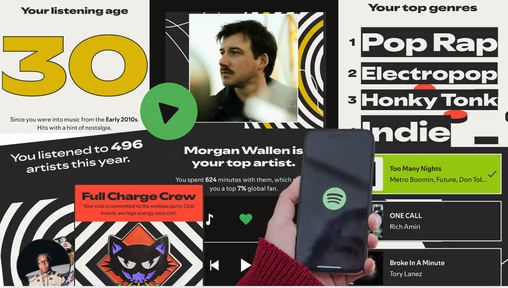
A cultural phenomenon during the first week of December has surpassed mere music data reporting: the annual release of Spotify Wrapped. Over the years, Spotify Wrapped has become more than just a summary of personalized music consumption; it’s a vibrant, interactive, shareable digital memoir that floods social media feeds. For a generation that lives by the mantra of “you are what you listen to,” Wrapped has cemented itself as one of the most anticipated pieces of the digital lifestyle calendar.
“I look forward to Wrapped because I want to see my music overview of the year,” said sophomore Xander Rigali. “It reminds me of the phases I went through throughout the year.”
Spotify Wrapped cleverly taps into human desires for self-discovery, social validation, and community. Wrapped transforms what would otherwise be cold, anonymous data like raw streaming numbers into a personal narrative by offering users personalized “listening age,” “music tribes,” and “top % of fans” statistics.
“It was so funny to see my listening age; I got 42 years old,” said Rigali. “It’s because I listen to bands like Red Hot Chili Peppers.”
The popularity of Wrapped intensifies the fear of missing out, driving user engagement, creating a massive wave of user-generated content that effectively advertises the platform for free, a cycle of virality that its competitors like Apple Music have since scrambled to replicate.
Senior Kate Liskowski feels some awkwardness when she has to tell her friends she uses Apple Music; however, she still feels Apple Music is superior to Spotify.
“I like how Apple Music puts your top 100 songs in a playlist,” said Lisowski. “Spotify doesn’t do that.”
The act of sharing one’s Wrapped summary is not just about showing off; it’s a modern form of self-expression, a low-stakes way to reveal personality and mood.
“Sharing my Wrapped is sharing a piece of my personality,” said Rigali.
While Wrapped’s attractive presentation makes it feel like an undeniable, perfect musical record of the year, a closer look at the methodology reveals that the results might not be as accurate a reflection of one’s listening habits. The occasional surprise, a barely remembered song, or an artist appearing in the top five often prompts users to question the true fidelity of Wrapped. This confusion primarily stems from two significant methodological choices made by Spotify: cut-off date and stream counting.
Spotify must stop collecting data well before the December launch to allow for the immense processing, quality checks, and creative design required for a global campaign (Spotify Support). Generally set around mid-November, the app stops tracking activity, meaning any heavy, end-of-year listening is excluded from the Wrapped metrics.
“I wish Spotify Wrapped was released later,” said Rigali. “I want to see how my December streams affect it.”
For a track to count as a “stream” for Wrapped purposes, it only needs to be played for more than 30 seconds. This focus on “play count” over “total minutes listened” creates an inconsistency. A 90-second song played five times can easily outrank a ten-minute piece played twice.
For most users data presentation isn’t an issue; it’s more of the experience.
“Since the app counts streams only after 90 seconds, I feel like Wrapped isn’t totally accurate,” said Rigali. “ I like comparing my Wrapped with my friends, and it’s exciting waiting for it to be released.”


 Colby Sizer
 hhladmin
 Hannah Murray