Emma DeGeorge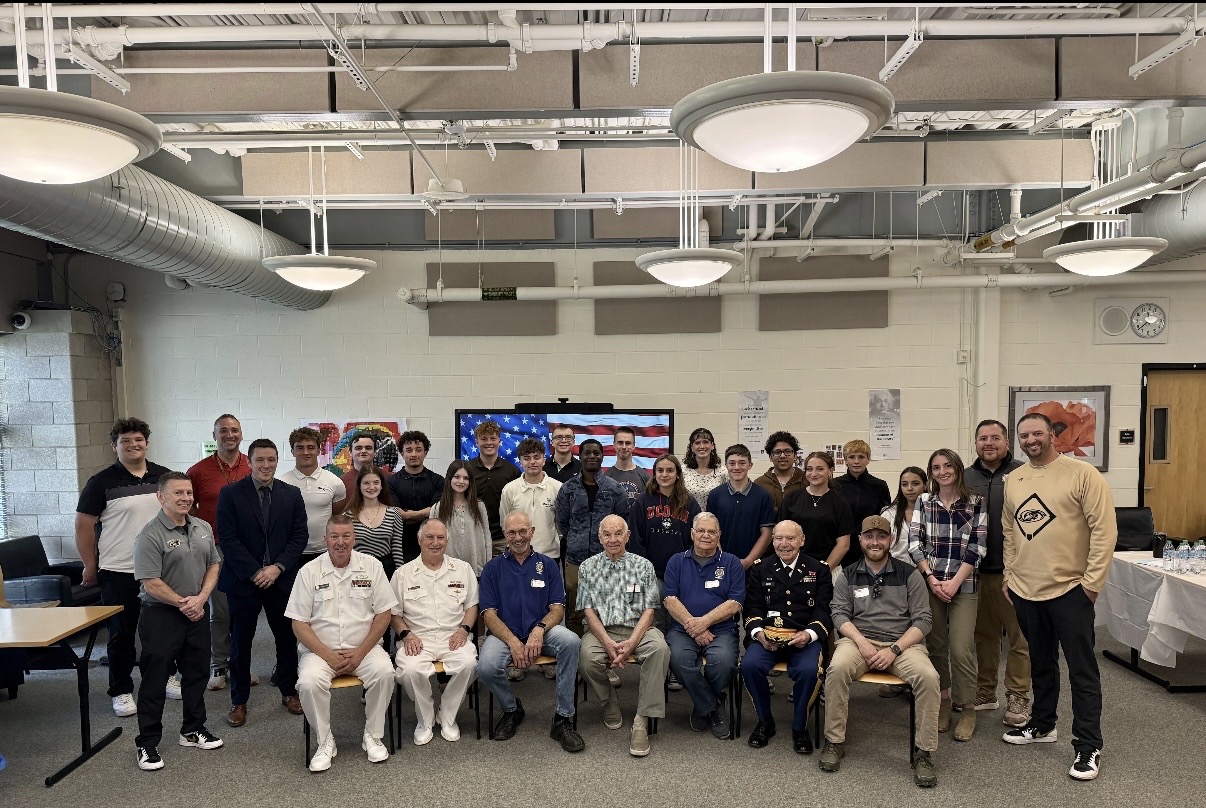
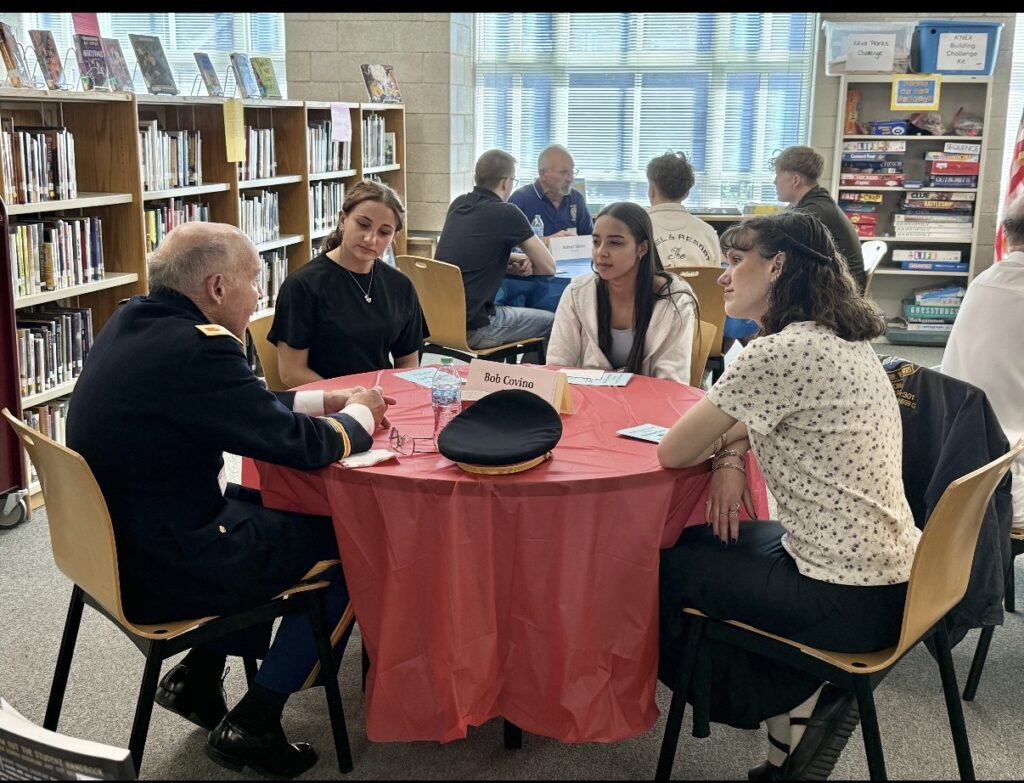
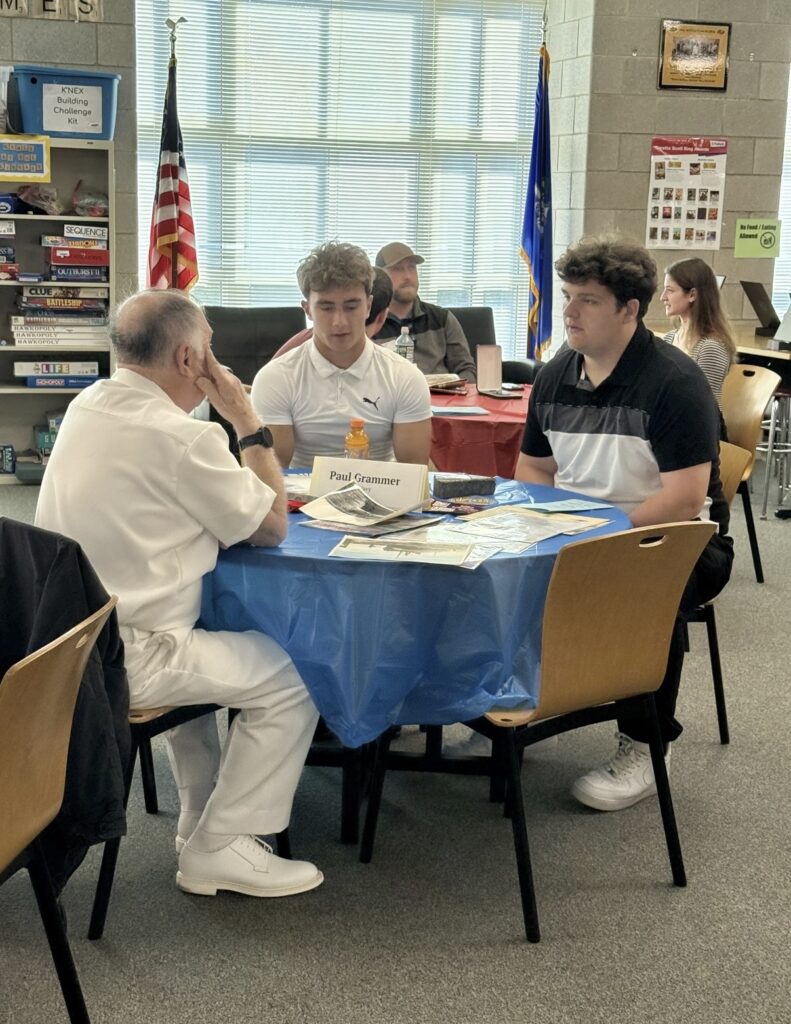
In a room usually filled with the everyday rhythms of school life, students sit a little more quietly, listening a little more closely. One by one, veterans share stories that rarely make it into textbooks, stories of discipline, sacrifice, uncertainty, and service. For many students, it is a rare opportunity to hear firsthand what military life truly entails. For a moment, the distractions of life are replaced by something more reflective: an awareness of the sacrifices made by people that might otherwise pass without a second thought.
“I get just as much out of it as the students do,” said Navy veteran Bruce Carlson, who returns to the Woodland Veterans Forum year after year. “I like sharing what it’s like to serve and maybe help students decide if they want to join or not.”
For him, the forum isn’t just about telling stories; it’s about giving students a glimpse into a world they’ve never experienced. He often describes boot camp, where strangers from every walk of life arrive as individuals and leave as a tightly bonded team.
“By the time you leave you’re all friends, and you all work together as a team,” said Carlson.
That sense of unity, however, doesn’t come easily. It is built on a level of discipline that, as Army veteran Daniel Lambrides explains, can feel foreign to those outside the military. Lambrides, who enlisted at just 17 and was sent overseas during the post–World War II occupation of Germany, highlighted how service gave his life a rigid structure that reshaped his life and his thinking.
“You’re given an order, you obey an order,” he said. “Most people in common society think orders are optional; they’re not.”
Reflecting on those lessons, he emphasized the importance of discipline and noted that our county’s youths seem to lack it.
Army veteran Robert Covino agrees that there is a disconnect between youths and veterans, noting a growing distance from those who serve.
“Generations growing up today are pretty much disassociated,” he said. “They have to appreciate people who serve; what I have done allows them to do whatever they want, freedom.”
For other veterans, the challenge is correcting misconceptions. Navy submarine veteran Paul Grammer noted that many people have only distorted views of the military.
“Most have the idea that everyone is cutthroat and mean,” said Grammer. “In actuality, most are very patriotic, not vicious or anything like that.”
Grammer’s own service beneath the ocean surface often captures students’ attention. At the forum each year, he tells the story of spending 80 straight days underwater in a submarine with no windows and no contact with the outside world. When he asks students to imagine sitting in the school library with no windows for that long, the room usually falls silent. It’s a moment when the abstract idea of “service” becomes something tangible and unsettling.
Those moments of realization are exactly what Air Force veteran Rich Minnick hopes to create. For Minnick, the forum serves as a reminder of contributions that are often overlooked.
“It’s to keep students aware of what veterans have contributed to the lives of all Americans,” he said.
Minninck also likes to contrast military service with other forms of community involvement, like volunteer firefighting.
“While many community volunteers return home each night, service members often spend countless days away from their families, seeing them only once or twice a year,” emphasized Minnick. “That’s a sacrifice often overlooked.”
Minnick’s decision to join was met with mixed emotions. He remembers feeling both motivated to serve and to build a future. The experience ultimately provided him with technical training, discipline, and teamwork skills that lasted long after his time in active duty. Even so, he stresses that recognition of veterans and active service members doesn’t require grand gestures, just small, intentional acts of respect, like pausing during the national anthem or thanking a veteran for their service.
By the end of the forum, the room is quieter, not out of obligation, but understanding. The stories linger: a 17-year-old sent overseas, months spent underwater without sunlight, years apart from family, orders that are not optional. These are not distant histories or abstract ideas; they are lived experiences that continue to shape the freedoms students take for granted every day.
Veterans do not return to the forum for recognition or praise. They return because they see a gap—one that can only be filled through conversation, listening, and education. The event is a rare point of contact between two vastly different realities. On one side are students concerned with tests, sports, and college plans. On the other hand are individuals who have lived under strict orders, endured long separations from family, and, in some cases, served in environments most people cannot imagine. The gap is not inevitable; it exists only as long as people choose not to learn and listen.


 hhladmin
 Brielle Philbrick
 Tyler Patchkofsky